How standing came back to English grounds without the terraces coming back
English football's licensed standing is not terracing by another name. Since 1 January 2022, clubs subject to the all-seater policy have been permitted to operate designated standing areas under strict conditions that treat the spectator as an allocated seat-holder who happens to be upright, not as a body in a crush. The model reverses the logic of the old terrace, where capacity was a physical limit, and replaces it with a ticketed, barrier-backed system where standing happens inside pre-counted, pre-assigned spaces.
In this piece
Standing by Design
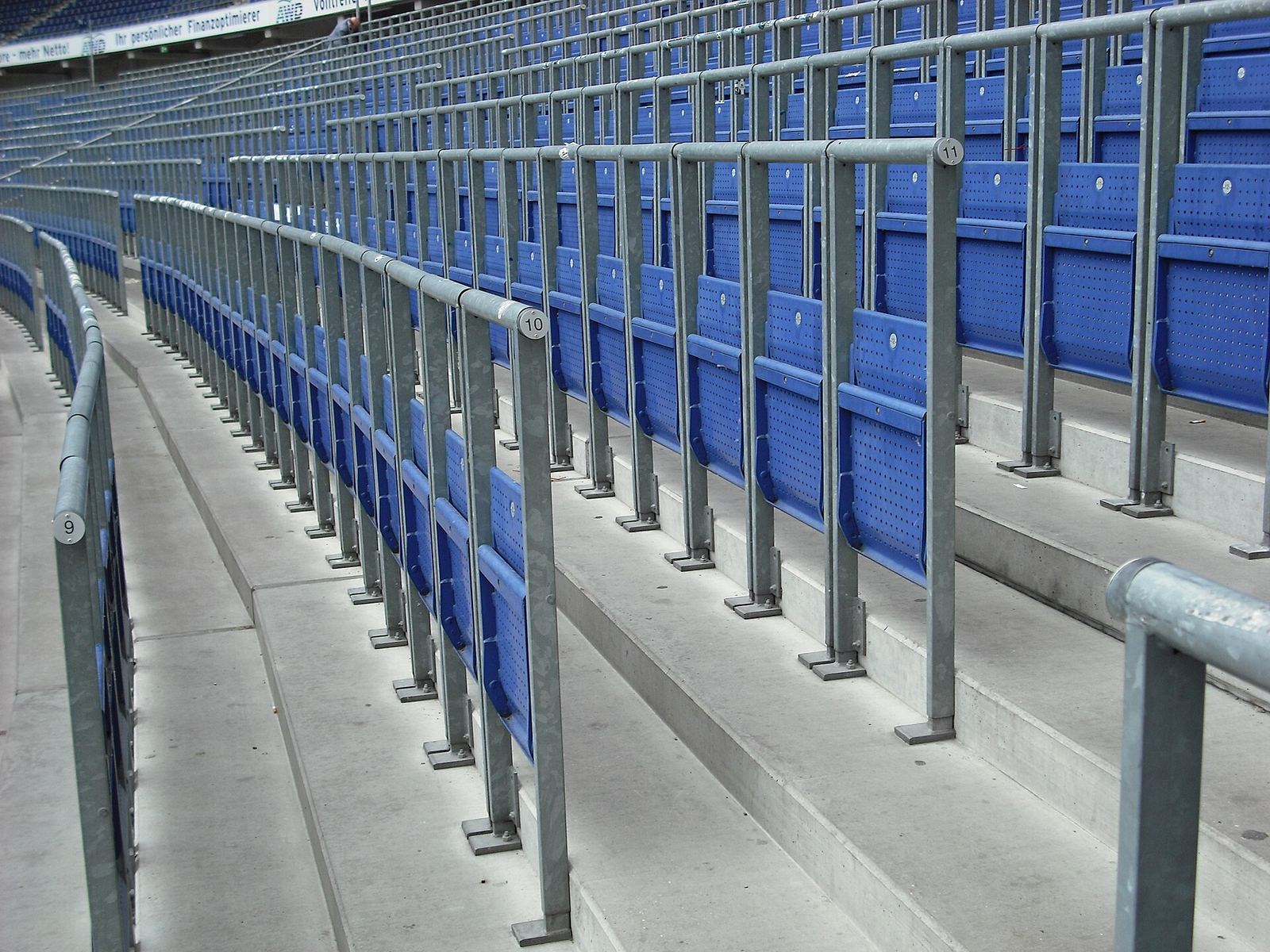
The infrastructure required by the Sports Grounds Safety Authority makes clear what licensed standing actually is. Seats must remain in place, equipped with barriers or backed by independent rails, and the same system must be installed for both home and away sections. Fans must retain the ability to sit or stand, and the seats cannot be locked in either position. Free movement into and out of rows is mandatory, with procedures to manage entry numbers and spectator behaviour.
Government guidance issued in July 2022 clarified that each supporter occupies the same area they would take if seated, with a traceable, numbered ticket. The standing occurs behind a barrier or rail in areas where persistent standing already occurs, but cannot impede the views of spectators elsewhere in the ground. Other parts of the stadium remain all-seated. The capacity of any licensed standing area is capped by the safety certificate issued by the relevant local authority, not by how many people might physically squeeze in.
The Four-Dimension Comparison
The difference between old terracing and licensed standing operates across four specific dimensions.
The spectator's unit of space: on a terrace, none was allocated; bodies filled available room until density reached its physical limit. Under licensed standing, each person has an identified, numbered seat-space that is theirs alone, whether they use it sitting or standing.
The barrier in front: terraces offered no systematic protection against forward surge. Licensed standing requires suitably designed independent barriers in front of each seat, or seats that incorporate barriers, protecting standing spectators from forward movement.
Crowd pressure: on terraces, surge propagated through the mass. In licensed standing, barriers arrest forward movement, entry is controlled, and stewards manage behaviour by ticketed location.
Who Authorizes It
The regulatory chain runs through three bodies. The Sports Grounds Safety Authority sets the criteria, including the requirement that licensed standing be available to both home and visiting supporters. Local authorities issue safety certificates that fix the maximum capacity for each licensed area. The government announced on 4 July 2022 that standing would be permitted at all clubs subject to the all-seated policy, provided they met SGSA licensing requirements.
This is not devolution of safety standards. The 2022 rollout applied only to clubs already under all-seater obligations, and the permission is conditional, not automatic. Clubs must demonstrate compliance with barrier specifications, entry controls, and the maintenance of seated accommodation elsewhere.
What Fans May and May Not Do
Football League ground regulations, last updated in 2026, set out the operational rules. Only ticketholders for licensed standing areas may access them. They must occupy only the space in front of the seat allocated on their ticket. Spectators in these areas may expect others to be standing during play, but may not sit or stand on the rails, nor stand on the seats themselves.
The regulations preserve the option to sit. The SGSA explicitly prohibits locking seats in the upright or folded position, maintaining the formal character of the area as seated accommodation being used while standing. This is not semantic. The legal classification affects insurance, licensing, and emergency evacuation procedures.
Why It Is Not Terracing
The all-seater policy remains the baseline. Licensed standing exists only inside designated, regulated pockets that meet SGSA criteria. The government guidance of July 2022 specified that standing areas cannot affect the views of other fans, and that other parts of grounds remain all-seated. The House of Commons briefing on the policy emphasizes that allocated, identifiable seats ensure the area cannot become overcrowded.
The structural distinction matters for liability, for emergency planning, and for the political settlement that followed the Taylor Report. Licensed standing was permitted only after decades of pressure and a pilot programme, and only on terms that preserved the core principle of the all-seater era: that every spectator has a named, traceable place.
Old terraces filled until they could not. Licensed standing begins with a fixed, named allocation and only then permits standing inside it.
Capacity and access details are quoted from the source named in the piece; grounds are rebuilt and relicensed.